
Most people in their 20s feel the same quiet frustration with money. The paycheck lands, a small piece of it goes to savings, an even smaller piece goes to a loan, and the rest disappears into bills. Two weeks later the cycle repeats, and it starts to feel like your money moves in slow motion.
This personal finance guide breaks that cycle into plain steps: know where you stand, set goals with deadlines, automate your savings, live below your means, think long term about your career, add income, keep learning, and start investing. None of it needs a finance degree. It needs honesty and a plan you can repeat.
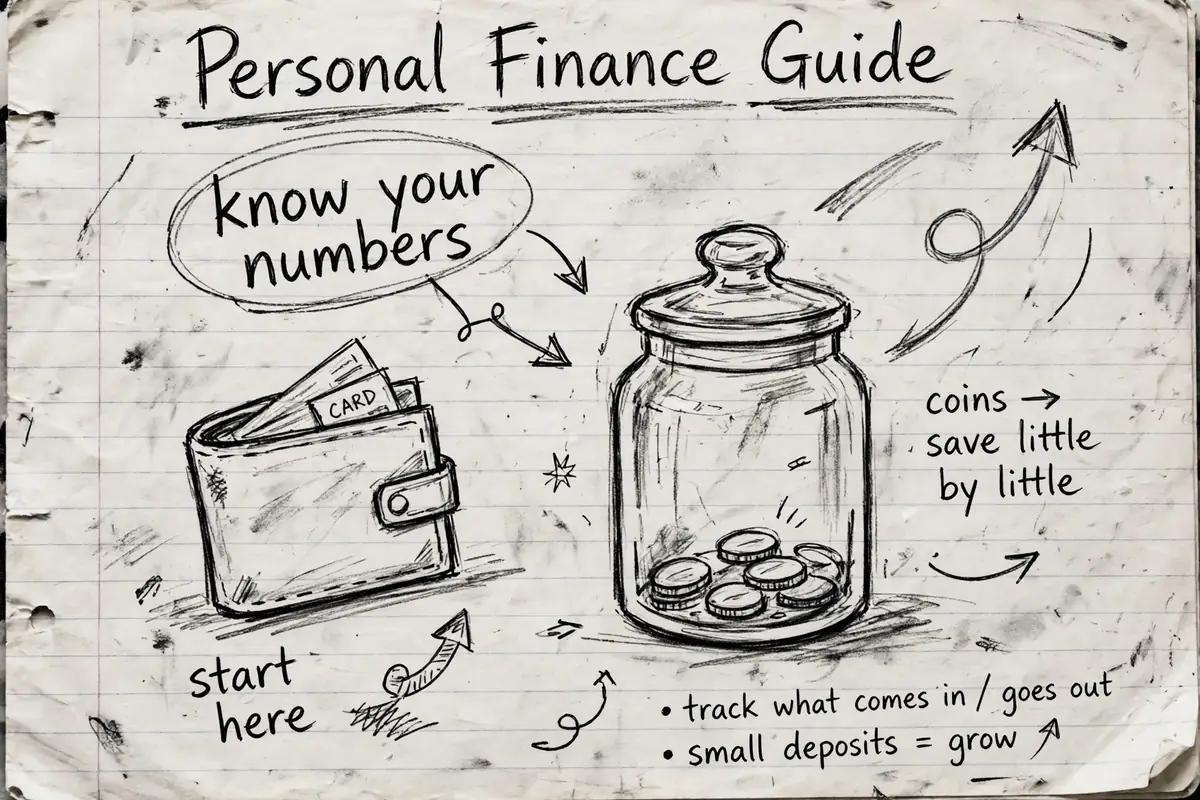
Start by looking at your real numbers
Every money plan begins with two questions. How much do you make, and how much do you save? If you cannot answer both, that is your starting point.
Look at your spending habits without flinching. Where does money leak out for no real reason? What is your biggest pain point: student loan debt, a thin credit score, no emergency fund? A lot of people carry guilt about past money mistakes, and that guilt quietly pushes them into repeating the same habits. Facing the numbers once a month or so shows you whether you are actually progressing, and it keeps one old mistake from discouraging you out of the whole effort.
Set goals with deadlines, then automate the plan
Goals work better when they are specific and carry a time limit. Save a set amount in two years. Clear a student loan. Stop living paycheck to paycheck. Goals like these are stepping stones, and writing them down makes them feel smaller and more reachable.
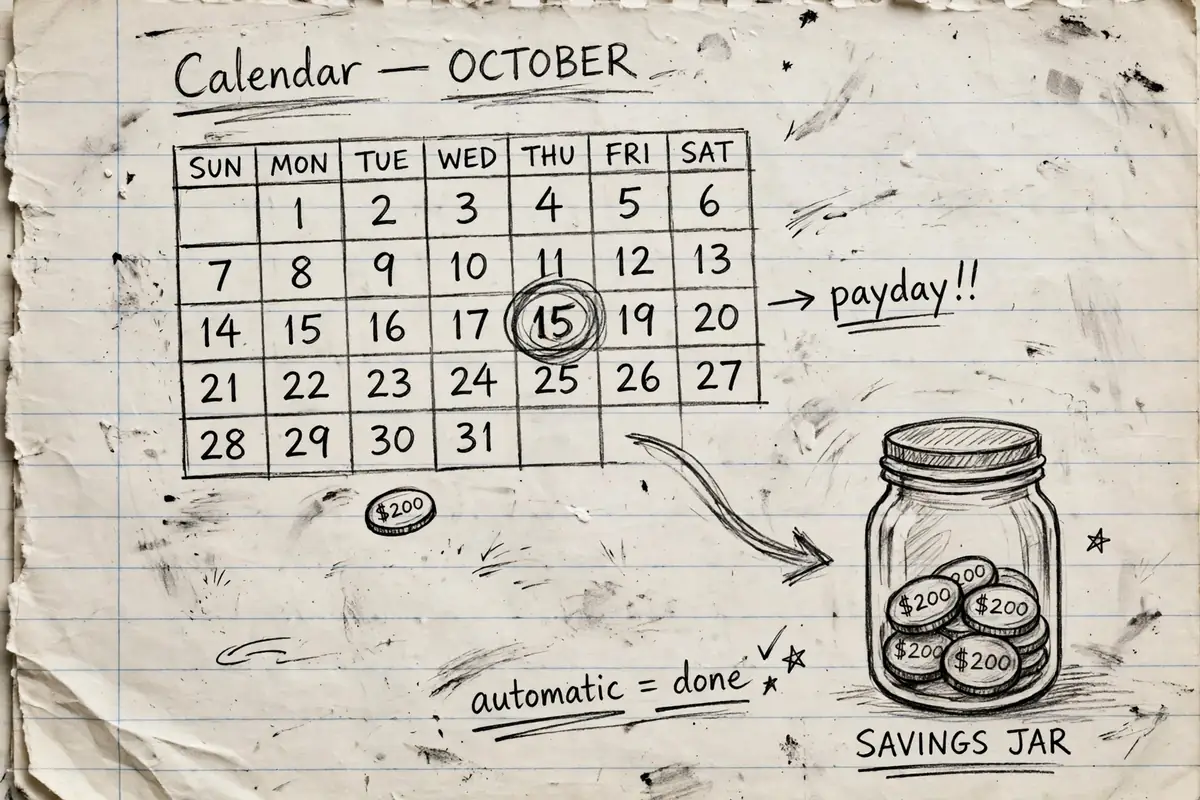
Then break the goal into a monthly number and automate it. Say you want your first $1,000 saved, and you give yourself six months. Saving $200 a month gets you there in five. Set that $200 to move into your savings account on its own every month, and after a while you stop missing it. Look up later and the balance is $2,000. It works like a gym plan: the routine looks simple on paper, and consistency does the heavy lifting. Automation removes the need to be disciplined from scratch every single month.
Live frugally without living cheap
Frugal living here does not mean clipping coupons or spending your weekends hunting the lowest price. It means being intentional with money and living below your means.
The danger shows up after things improve. You earn more, you save more, and suddenly the lifestyles around you start to look better than yours. Spending more just because you make more is lifestyle creep, and it erases the clarity you built around your goals. The smarter move is boring: keep your expenses roughly the same while your income grows, and let the gap do the work.
Creep is not only about money, either. It eats time too. Protecting the hours you promised to a goal, even when friends are calling, is the same discipline in a different form.
Think long term about your career
Long-term thinking runs on timing. Keep a mental clock for your career: when you will ask for a raise, when you will go for a promotion, how long you plan to stay while you figure out your next move. Setting milestones, like a target income by the end of the year and a bigger one five years out, keeps you on track for your own plan instead of somebody else’s.
It also means staying loyal to your own timeline when a job gets rough. Quitting in anger after a bad week can leave you with income gaps and a rushed job search. There is a reason people say the best time to look for a job is while you already have one: you search calmly, from a position of strength. One worker stuck out a job he hated for a year and a half to build his resume, moved to a better company at the right moment, and was still getting paid when the pandemic shut his old employer down completely and laid everyone off. His savings, built during those same hard months, covered him too.
Open your retirement account early
Set up your workplace retirement account as soon as you can. It is usually a 401(k), though your employer might offer a 403(b) or something similar, so check with HR. If your job offers nothing, a Roth IRA is a solid place to start. Small amounts from each paycheck, started early, have decades to grow.
Guard your credit score
Your credit score decides how many options you will have later, from renting an apartment to borrowing at a fair rate. Learn how it works, pay on time, and improve it steadily. It is slow work, and it pays off for years.
Add a second stream of income
One income stream is fragile, and recent years proved it. A second stream does not need to be grand. Teaching drumline lessons to high school and college hopefuls, advertised with a simple online post, brought in an extra $200 a month at zero cost. A coworker sold home-cooked plates at work for about three times what the groceries cost her, and people lined up. Driving for a rideshare service counts too. Any skill you already have can probably earn something on the side, and that extra money goes straight at your goals.

Learn a little about money every day
Daily learning sounds like homework, but it can ride along with things you already do. Listen to a finance or business podcast while you drive, cook, or clean. You were spending that time anyway; now it teaches you something. Books and podcasts exist for nearly every interest, and hearing other people tell their money stories opens your mind to options you had not considered. The more you learn, the more value you can offer, and the more value you offer, the more you can earn.
Invest in yourself first, then start investing
Before the stock market, invest in yourself. Courses, books, business events, mentors, even a coach: money spent on a skill you are serious about tends to pay you back. Pick the thing you genuinely want to improve and earn from, and put your learning money there.
When you do start investing in the stock market, treat it like a subject to study, not a game to guess. Spend time each day learning what makes a sound investment before you commit serious money, and research every decision. Starting small while you learn beats waiting until you feel like an expert, because that day rarely announces itself.
How much money should I save each month?
There is no single number that fits everyone, and anyone who gives you one without asking about your income is guessing. Start from a goal instead. Pick an amount that matters, like $1,000, divide it by the months you are willing to take, and automate that monthly figure. The $200 a month example above reaches $1,000 in five months. If $200 is too much right now, start lower and raise the amount when your income grows. A smaller automatic transfer you actually keep beats a bigger one you cancel by March.
Reinvest what you earn and keep leveling up
The last step is a loop. When extra money comes in, a bonus or side income, put part of it back to work: better tools for the thing that earns you money, or more into your investments. Reinvesting buys growth, and sometimes it buys time, which you can spend making more. That is also how small starts turn into bigger ones over the years, a pattern we break down in our guide to how to make your first million. It starts with discipline. It ends with consistency.
Disclaimer: This article is educational content only. It is not financial advice, and it does not promise any income or investment result. Talk to a qualified professional before making decisions with your money.