Freelancing looks simple from a distance. You pick a skill, find clients online, work from wherever you like, and get paid. Then real questions show up. What if no one hires you? How do you even begin?
This guide explains how to start freelancing the way an introductory class would teach it: what the work is, which fears about it are wrong, the qualities clients judge you on, and a clear order of steps to follow before you pitch anyone. No shortcuts are promised. What you get is a sequence you can work through, one step at a time.
What freelancing actually means
Freelancing means doing work for clients without becoming their full-time employee. You are not on their payroll. You sell a skill, deliver an agreed piece of work, and get paid per project, per hour, or per milestone, as settled at the start.
That arrangement gives you control over your time. If you stop applying for work, the work stops, and the rest of your day is yours. The freedom is real, and so is the responsibility.
Four freelancing myths worth dropping early
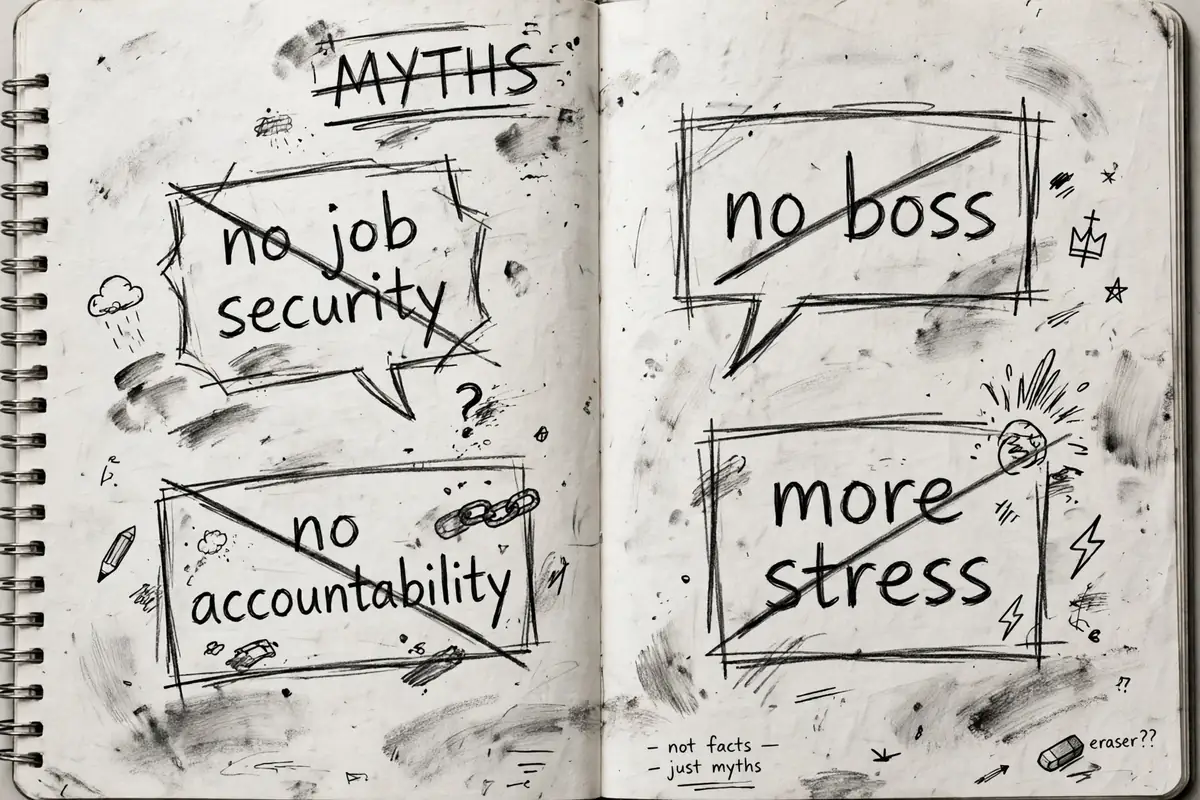
Myth 1: there is no job security
The worry goes like this: no employer means no safety net, and a client can vanish at any time. But a freelancer is not tied to one contract. You can run three or five jobs at once if you can handle them, and spread across several clients, your income hangs on no single boss.
Myth 2: you have no boss
You do. Your client is your boss for as long as their project lasts. You follow the brief you agreed on, and they pay you when the milestone or the finished job lands. Treating clients as people you answer to keeps beginners out of trouble.
Myth 3: you answer to nobody
Freelancing removes the office, not accountability. Deadlines and reputations still exist. Many keep an accountability partner or a fixed structure for the week, because working alone can quietly turn into working whenever you feel like it, and clients notice.
Myth 4: it is more stressful than a full-time job
Stress follows the type of work, not the employment label. Some freelancers work more than eight hours a day. Others finish in under an hour. A demanding job is demanding in both worlds; what changes is who decides your hours.
Why people choose freelancing
Four reasons come up again and again. Your hours are flexible, so work fits around the rest of life. You control your time and decide when to stop. Your location is flexible too, since the work is remote by nature: home, school, a cafe, a library, or a small office all count.
The fourth reason is easy to overlook: freelancing leaves room to keep learning. A freelancer can block off a morning for a course or a book, then work later. That learning time is often what turns a side income into a career. If the money side is your main motivation, our guide to making your first million covers the longer game behind these early steps.
The qualities clients quietly judge you on
Skills get you considered. These qualities get you hired twice.
Communication ranked first in the tutorial’s breakdown of freelancer qualities. Remote work runs on messages, calls, and Zoom meetings, where nobody can read your face. Ask clear questions when a brief is vague, and say so when a contract term confuses you.
Industry knowledge came next, rated at 22.8 percent in the same breakdown. Clients hand work to people who clearly know their field and drop people who turn in weak work.
Time management decides whether you can hold several jobs without dropping one. Block hours per client, and keep to the blocks.
Self-confidence shows up in every call. Look at the camera, speak clearly, and talk about your work like someone who can handle it. Clients read hesitation as inability, even when the work is fine.
Negotiation runs through everything: price, hours, deliverables, and whether you are paid monthly, per project, or per milestone. You will do it weekly.
Freelance skills clients actually hire for
The tutorial lists the skills in demand right now: web development, software applications, writing and copywriting, graphic design, social media marketing, video editing and production, data analysis, virtual assistance, translation, social media management, UI/UX design, and AI-related work. Web development and copywriting still pay well for people who are genuinely good at them.
You do not need all of these. Pick one and get good at it. Free and low-cost places to build a skill include YouTube, Udemy, LinkedIn Learning, Coursera, Skillshare, Pluralsight, HubSpot Academy, and edX.
Where the work is: freelance platforms
Once you have a skill, marketplaces are where buyers and sellers meet. The tutorial names Upwork, Fiverr, Freelancer.com, Guru.com, PeoplePerHour, LinkedIn, 99designs, SimplyHired, and Toptal. Some are built for specific skills; designers can host work on Behance, which doubles as a portfolio clients browse.
Marketplaces work because the buyers arrive on their own, the same logic behind the many ways Amazon makes money. As a beginner, one or two platforms plus LinkedIn is plenty.
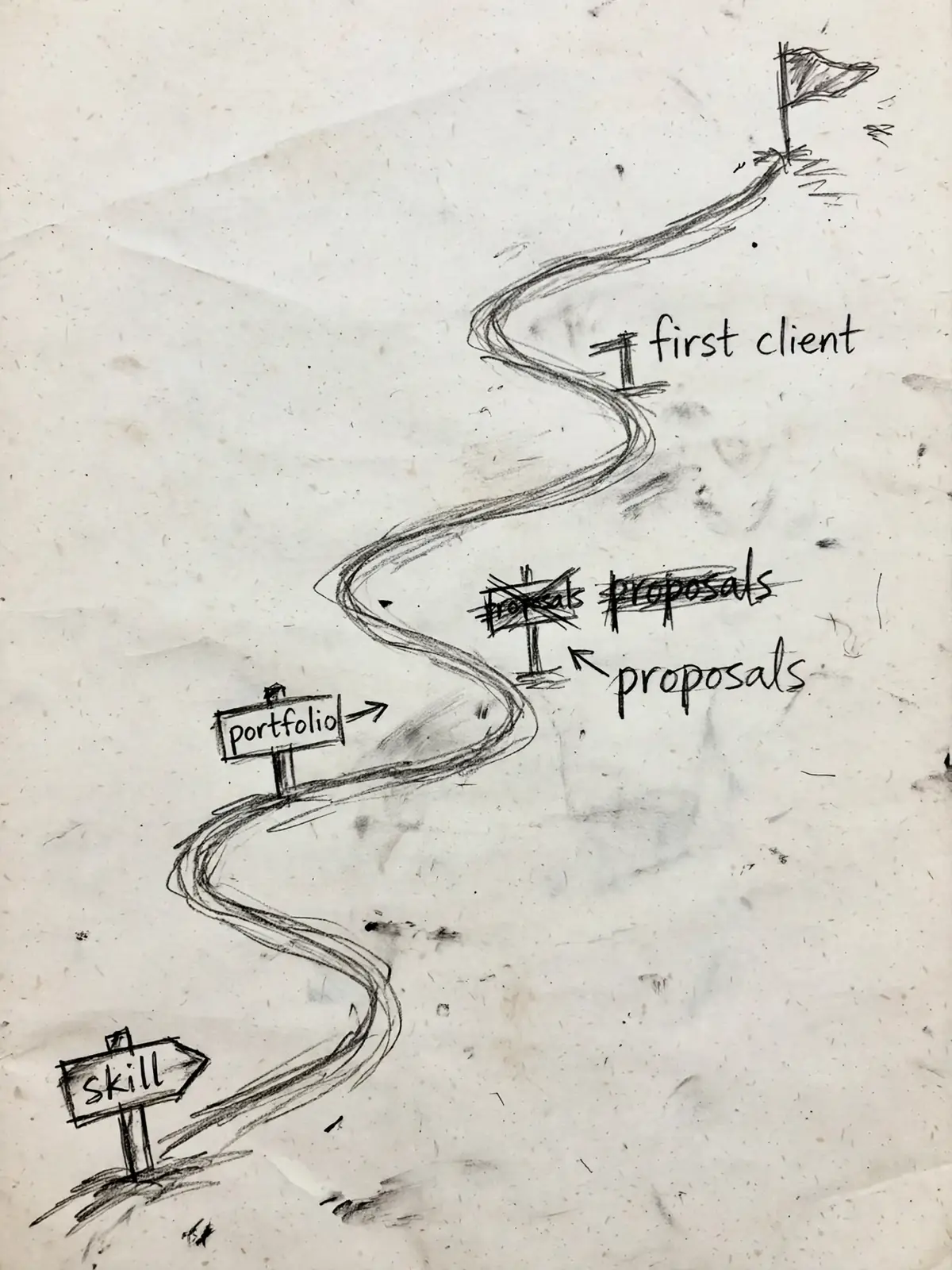
How to start freelancing, step by step
Step 1: define your skill and narrow it down
“I am a writer” is too wide to sell. A client looking for a technical writer will pass over a general writer and hire the person whose profile says technical writer. Pick your kind of writing, design, or development. A narrow offer reads as authority.
Step 2: find your target audience
Know who needs your narrowed skill before you pitch. A technical writer’s clients sit in software companies, not in hospitals. Work out which businesses buy what you sell and aim there, instead of applying everywhere.
Step 3: build a pricing structure before anyone asks
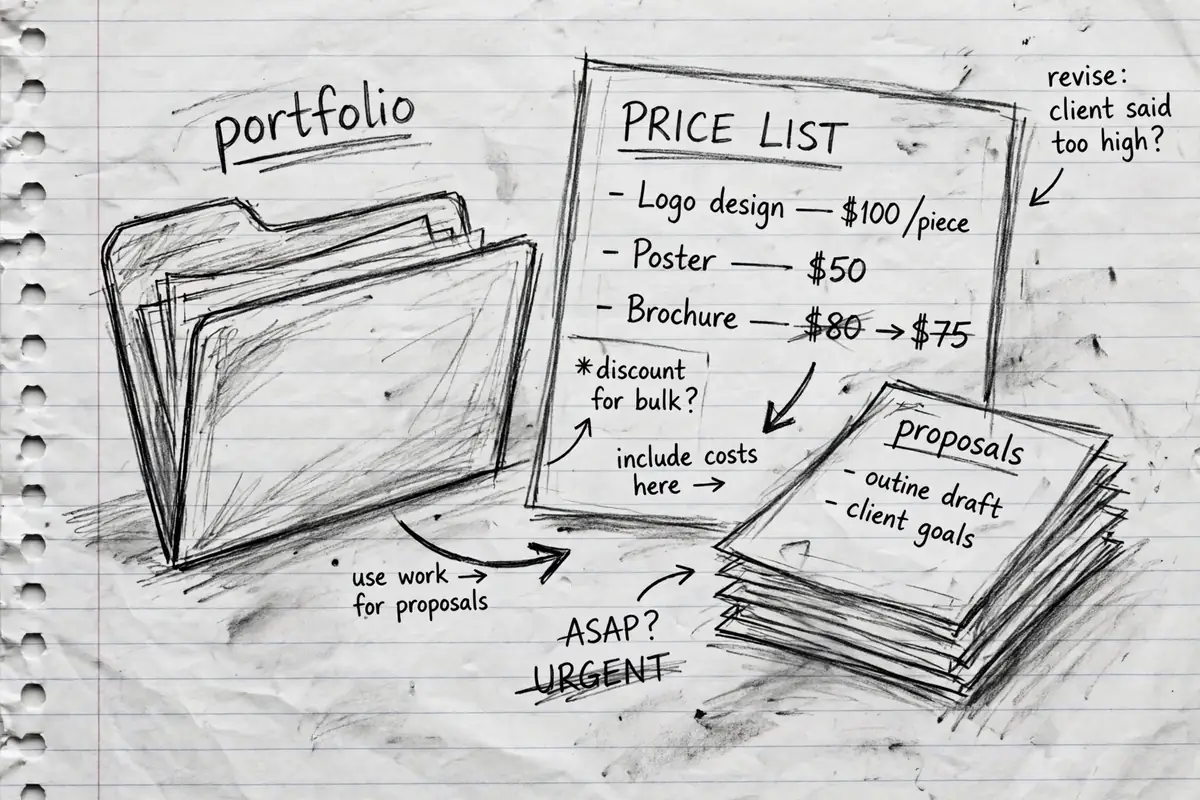
Decide your rates in advance and write them down in a document you can send. Charging one client 20 dollars and another 50 for the same work, off the top of your head, looks careless. A prepared pricing sheet, made in something simple like Canva, looks professional and shortens the haggling.
Step 4: create your portfolio
A portfolio is a curated collection of your best work: a Behance page, a LinkedIn profile, an organized Google Drive folder, a Notion page, or a Canva site. Clients want one link that shows what you can do, not scattered files sent one at a time. Use your strongest pieces only.
Step 5: prepare a proposal system
On platforms like Upwork, every application is a pitch: what you can do, what you have done, why you fit this job. Keep a folder of proposal drafts. When a job fits, copy the closest draft, adjust it to the client, and send it.
Step 6: build real relationships with clients
Do good work and be easy to work with, because satisfied clients refer you, and referrals beat cold applications. A client who trusts you will name you when a colleague needs your skill.
Step 7: keep developing your skills
Skills age and tools change. Keep learning as you earn. With AI tools, use them for research, templates, organizing your work, and checking grammar. Submitting fully AI-written articles as your own is risky, since sites exist that test for it and can flag you.
How to sell yourself without sounding like a salesman
Nobody hires you because you announced that you are valuable. People hire proof. Talk about what you can deliver, then show it: samples, results, finished work. People buy the person as much as the service.
Two habits build that proof in public. Teach what you know, through posts and short lessons in your niche, because teaching reads as authority. And collect reviews and testimonials from every client, asking directly for feedback. Sharing your learning progress helps too. Above all, show up daily. A closed mouth, as the saying in the tutorial goes, is a closed destiny.
Can you start freelancing with no experience?
Yes, and most people do. What you cannot skip is proof of ability, and proof does not require a past client. Learn one skill through free resources like YouTube or the course sites listed earlier, do your best work on practice pieces, and put them in a portfolio on Behance, Notion, or Google Drive. Your first jobs then become the experience.
First move
Pick the skill today. Not the platform, not the logo, not the profile photo. One skill that you are willing to practice until a stranger would pay for it. Everything in this guide lines up behind that decision.
This article is educational content about starting freelance work. It is not financial advice, and it does not promise any income or result. What you earn depends on your skill, your market, and the effort you put in.