Mouse Trap
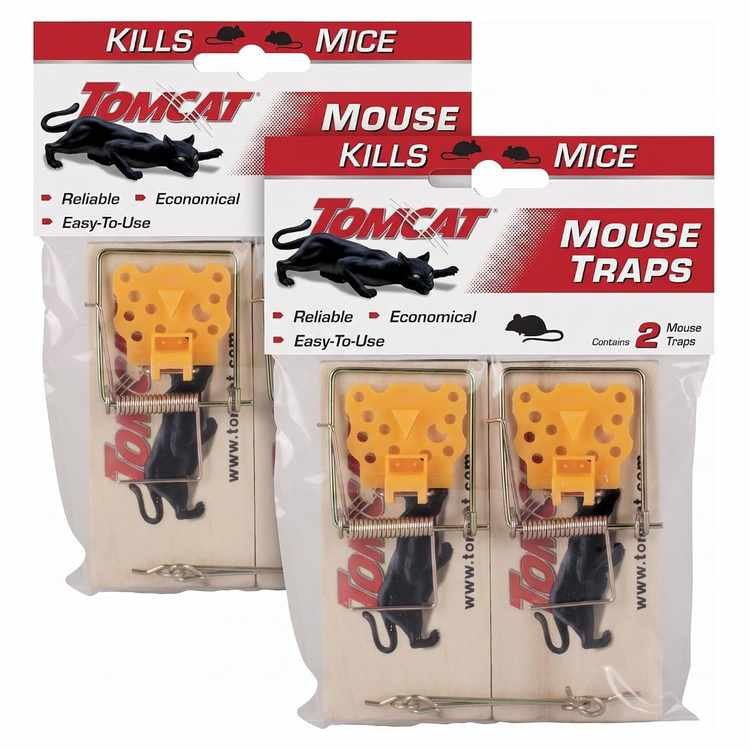
Droppings in the pantry, a gnawed cereal box, that scratching sound behind the kitchen wall at 2 a.m. — mice do not wait for an invitation, and they do not leave on their own. The fix is older than any gadget on the market: the classic wooden snap trap. This 2-pack is the plain, honest version — a wood base, a steel spring, a U-shaped kill bar and a yellow cheese-style trigger pedal. No poison, no chemicals, no batteries. Bait it, set it against the wall, and let the spring do the work.
In this article
Wooden Snap Mouse Traps — 2-Pack with Cheese-Style Trigger Pedal
- 2 wooden snap traps in the pack — cover two hot spots at once
- Classic design: wood base, steel spring, U-shaped kill bar
- Yellow cheese-style trigger pedal — bait with peanut butter or attractant gel
- No poison, no chemicals — a purely mechanical snap
PROS
- ✓ Simple, proven design — the classic snap trap that has worked for decades
- ✓ No poison or chemicals — safe to use around food storage areas
- ✓ Adjustable trigger — move the pin inward for a sensitive set, outward for a firmer one
- ✓ 2 traps per pack — set one in the kitchen, one in the basement or garage
- ✓ Reusable — inspect the wood and trigger between catches and reset
CONS
- ✕ Wood can warp or swell in damp areas — best for dry indoor placement
- ✕ No bait included — you need peanut butter or attractant gel
- ✕ Setting takes care — the bar snaps shut with force, so mind your fingers
- ✕ Check daily — a caught mouse must be disposed of promptly
Mouse Trap Key Specifications
| Pack Size | 2 traps |
| Type | Wooden snap trap — mechanical, spring-loaded |
| Material | Wood base, steel spring and U-shaped kill bar, plastic trigger pedal |
| Trigger | Yellow cheese-style pedal; pin adjusts sensitivity (inward = sensitive, outward = firm) |
| Bait | Attractant gel or peanut butter (not included) |
| Placement | Against walls where mice travel — kitchens, basements, garages |
| Use | Dry indoor placement; wood can warp in damp areas |
| Reuse | Traditionally reusable — inspect the wood and trigger between catches |
How the Classic Snap Trap Works
There is nothing electronic here and nothing to charge. A coiled steel spring holds the U-shaped kill bar under tension; the yellow pedal locks it in place. When a mouse steps on the pedal to reach the bait, the pin releases and the bar snaps shut in a fraction of a second. That is the whole mechanism — wood, steel and a spring — which is exactly why it still works after a century of fancier alternatives. No poison means no risk of a mouse dying inside a wall cavity, and no chemicals means the trap is fine to set near food storage.
Setting It Right
First bait the trigger: a pea-sized dab of peanut butter on the yellow pedal works as well as any store-bought gel. Then pull the U-shaped bar to the opposite end and insert the pin into the hole opposite the trigger. The pin position is the fine-tuning — slide it inward for a hair-trigger set that fires at the lightest touch, or outward for a firmer set that ignores a mouse just sniffing around. Keep your fingers clear of the bar while you set it; the spring is strong enough to do its job, and it will not wait for you to move your hand.
Where to Place the Traps
Mice run along walls, not across open floors — they follow baseboards from hiding to food. Set each trap perpendicular to the wall, trigger end facing the baseboard, in the rooms where you have seen droppings or gnaw marks: under the kitchen sink, behind the stove, along the basement wall, near the garage door. Two traps in the pack means you can cover two separate runs at once instead of moving one trap around and guessing. Check both traps daily and dispose of any catch promptly, then reset and put the trap back in the same spot — mice use the same routes night after night.
Wood, Water and Reuse
The one honest weakness of a wooden trap is moisture. Wood swells and warps in damp basements or near leaks, and a warped base can jam the trigger or weaken the spring’s hold. Keep these traps in dry indoor spots, and between catches give each one a quick look: if the base is warped, the pedal is cracked, or the spring no longer holds tension, retire it. A trap in good shape can be reset and used again — that is the point of the classic design, and it is why a 2-pack lasts longer than two nights.
Who Is It For?
Anyone who has found mouse droppings in the pantry or heard scratching in the walls and wants the problem handled tonight, without poison and without a subscription gadget. It is the right pick for a kitchen, basement or garage where you know the mouse run and just need two reliable traps on it. If you would rather not handle a caught mouse at all, look at the glue-trap pick below instead — and if you want a tougher plastic snap trap you can set with your foot, the 6-pack pick below covers that too.
You May Also Like
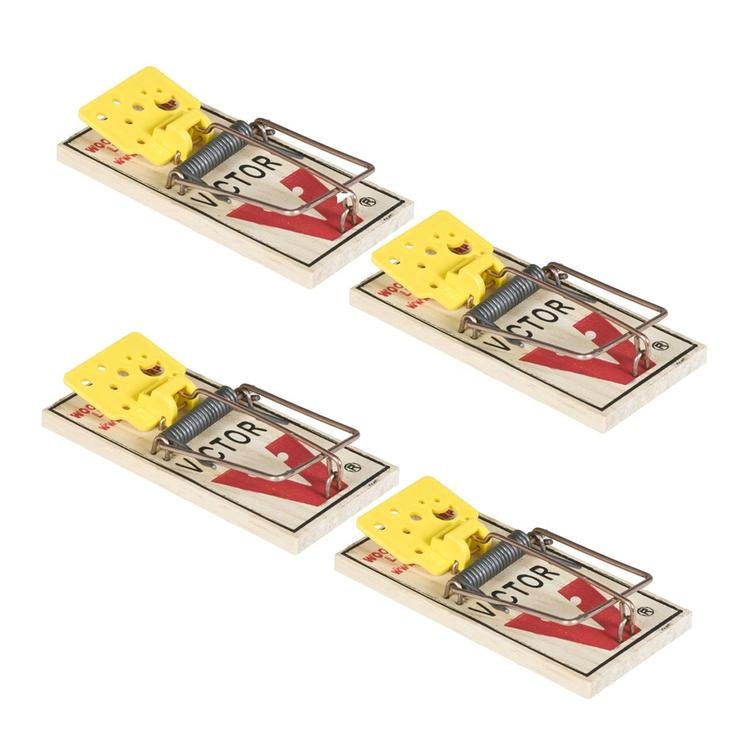
Wooden Snap Mouse Traps — 4-Pack, Metal Pedal, Reusable or Disposable
Four classic wood-and-wire snap traps with metal pedals and yellow cheese-style triggers — set four spots at once, reuse or dispose after a catch.
Check Product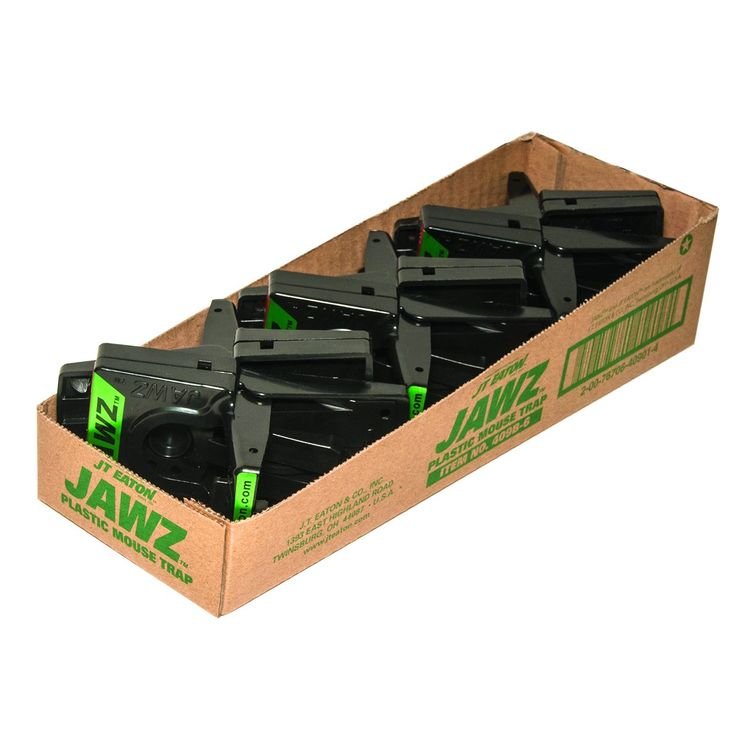
Plastic Snap Mouse Traps — 6-Pack, Solid or Liquid Bait, No-Touch Disposal
Six black plastic snap traps with a set indicator and no-touch disposal — works with solid or liquid bait, and the plastic body wipes clean between uses.
Check Product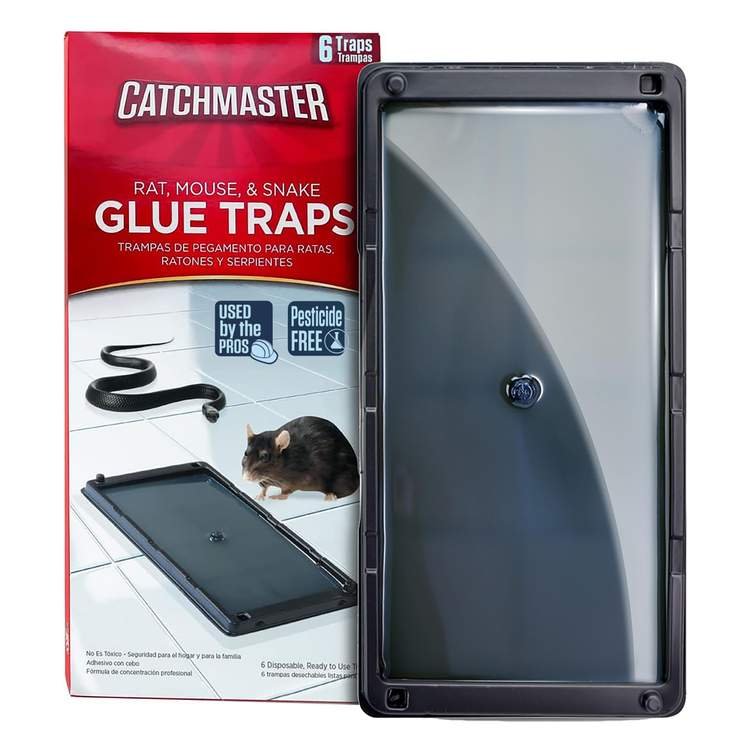
Glue Traps — 6-Pack, Large Adhesive Trays for Rats, Mice & Snakes
Six large pre-baited adhesive trays — ready to use with no bait needed, pesticide-free, and strong enough for rats, mice, snakes and spiders.
Check ProductFrequently Asked Questions
Two wooden snap traps — enough to cover two mouse runs at once, for example one in the kitchen and one in the basement.
Bait the yellow pedal with a pea-sized dab of peanut butter or attractant gel, pull the U-shaped bar to the opposite end, and insert the pin into the hole opposite the trigger. Move the pin inward for a more sensitive trigger, or outward for a firmer set.
Against walls where mice travel — mice run along baseboards, not across open floors. Put them in kitchens, basements and garages, trigger end facing the wall, near droppings or gnaw marks.
No — it is a purely mechanical trap. A steel spring and kill bar do the work, with no poison, no chemicals and no batteries.
Yes — wooden snap traps are traditionally reusable. Inspect the wood and trigger between catches, and replace a trap if the base is warped, the pedal is cracked, or the spring no longer holds.
Final Verdict: Should You Buy It?
If mice are in the house, this is the right kind of buy: two classic wooden snap traps, no poison, no batteries, no fuss — bait them, set them against the wall, and check them daily. Just know its two limits before you buy — the wood does not like damp spots, and you will be handling the trap when you dispose of a catch. For a kitchen, basement or garage mouse run, that trade is well worth it.
Check Product