
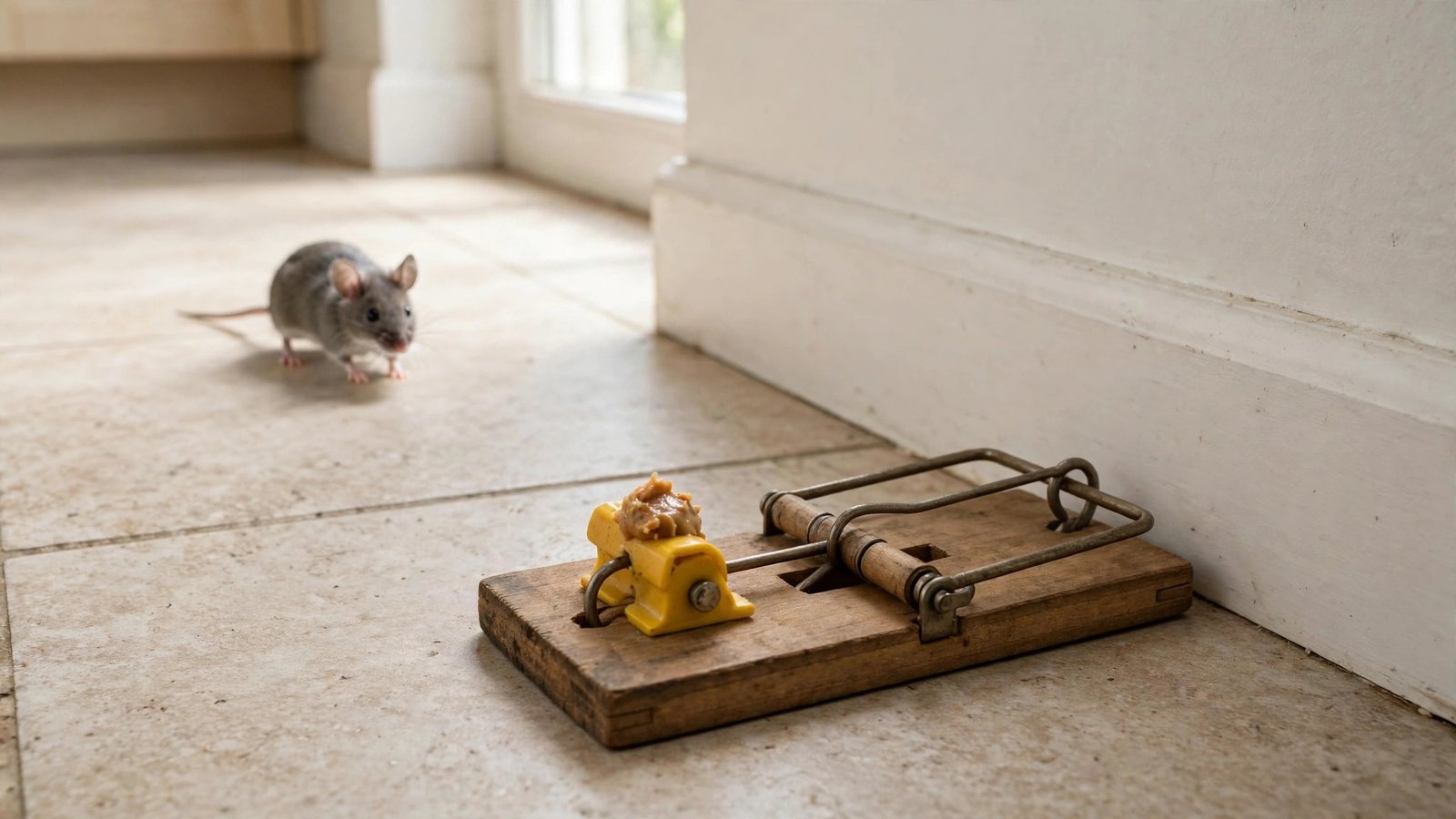
You set the trap with a tempting blob of peanut butter, and by morning the bait is gone — but the trap never fired and there is no mouse. It is one of the most frustrating parts of pest control, and it happens for a few simple, fixable reasons.
In this article
Why a Mouse Can Steal Bait Without Setting Off the Trap
Mice are light and cautious. A mouse can lick soft bait like peanut butter slowly, a tiny bit at a time, without ever pressing the pedal hard enough to trigger the trap. A large blob of bait makes this worse: the mouse can eat from the edge without stepping on the pedal at all. Trap placement matters too — a trap sitting in the middle of a room is easy for a mouse to approach from the safe side.
Fix 1: Use Less Bait, and Make the Mouse Work for It
Use a pea-sized amount of bait and press it firmly into the pedal’s bait cup. Even better, tie a small piece of bait to the pedal with dental floss or thread. When the mouse tugs at it, the pedal moves — and the trap fires.
Fix 2: Set the Trap to Sensitive
Many snap traps have two settings, often marked F (firm) and S (sensitive). If mice keep stealing bait, set the trap to S so the lightest touch triggers it. Test it once with a pencil tap before baiting, so you know it fires easily.
Fix 3: Place the Trap Where Mice Actually Walk
Mice travel along walls, not across open floors. Place the trap against the wall with the pedal end facing the wall, right on the path the mouse already uses. Two traps a few inches apart work better than one — a mouse jumping the first trap often lands on the second. Our hands-on post on the Mouse Trap – 4 Count shows the basic snap trap this setup uses.
Use a Wide Pedal Mouse Trap for a Bigger Trigger Area
A wide pedal gives the mouse a much larger trigger surface, so it is far harder for it to eat without setting the trap off. See our hands-on posts on the mouse traps we recommend — including the Victor wide pedal snap traps with firm and sensitive settings — for sizes, pack options and setup tips.
The short version: less bait, tied down tight, trap set to sensitive, placed against the wall. Change those four things and the “stolen bait” problem usually ends within a night or two.
Affiliate Disclosure: As an Amazon Associate, I earn from qualifying purchases at no additional cost to you.