Most guides tell you to wait for 5,000 followers before earning anything on TikTok Shop. That advice skips a step. If you want to know how to start TikTok Shop affiliate marketing as a small account, the route in is the pilot program at 1,000 followers. The presenter made his first affiliate sale the same day he started.
A TikTok Shop affiliate promotes products that other sellers list on TikTok Shop. You post a video, attach the product, and when a viewer buys through that link you earn a commission on the sale. The seller holds the stock, ships the order and handles customer service. You handle none of it. Your job is the content.
On earnings, he says new affiliates report $100 to $1,000 in their first few months, varying a lot with consistent posting. Treat that as one creator’s report, not a typical result.
How many followers do you need to start TikTok Shop affiliate marketing?
You need 1,000 followers to enter, not 5,000. You must also be 18 or older and US-based. At 1,000 followers you join the creator pilot program. Reaching 5,000 graduates you to the full TikTok Shop creator program, but earning starts at 1,000.
What the pilot program limits
The pilot is a trial period with caps: up to three shoppable LIVEs a week, a limited number of shoppable videos, and products only from shops rated 95 percent or higher. He argues the rating rule helps you, since it pushes you toward shops that treat customers well, and five shoppable videos a week is a workable rhythm for a beginner.
The three tasks that graduate you early
TikTok lists three tasks. Finishing all three moves you out of the pilot before you reach 5,000 followers:
- Post at least six shoppable videos that are eight seconds or longer.
- Host one livestream of at least five minutes featuring a product.
- Generate 10 orders from your content.
Finish the tasks, stay in the program 30 days, and graduation is automatic on day 31, no application or review queue. Reaching 5,000 followers graduates you too. His point: the wait is better spent posting, since pilot videos keep collecting views, followers and sales afterward. He says some of his still perform after one to two years.
Getting to your first 1,000 followers
Pick one niche and stay in it. Random topics give TikTok no clear audience to send your videos to.
His recommended starting format is faceless educational content: screen recordings, a voiceover, text on screen. No face on camera, no filming setup, and it works in almost any niche.
Warm the account up first: a few days of watching niche videos and commenting like a normal viewer, so TikTok can place your account in a topic. Then post.
Paid help is optional. Boosting a proven video through TikTok Ads Manager can speed growth because the targeting works. He calls TikTok Promote, the in-app boost button, money wasted in his experience, and advises against buying an existing account. The ban risk is real.
Joining the program, step by step
The signup path runs inside the app:
- Open your TikTok profile and tap the menu in the top right.
- Open TikTok Studio and scroll to the monetization section.
- Choose TikTok Shop for Creator, not TikTok Shop for Seller, which is for people listing their own products.
- Tap Join and work through the short intro screens.
After joining you land on a creator dashboard with your sales and commission, plus the product marketplace, your showcase, earnings, sample requests and campaign invites.
Finding products that are already selling
You can browse the product marketplace inside TikTok Shop, though he finds it cluttered and does most research in Shop Shark, an analytics tool built on TikTok Shop data.
Open a product page and read the numbers first. His example, a Bluetooth thermal tattoo stencil printer, had 1,120 units sold and a 4.8 star rating from 134 reviews, but its last seven days were weaker: 94 orders against 503 add-to-carts, a 3.5 percent click-through rate, 28 creators already promoting it.
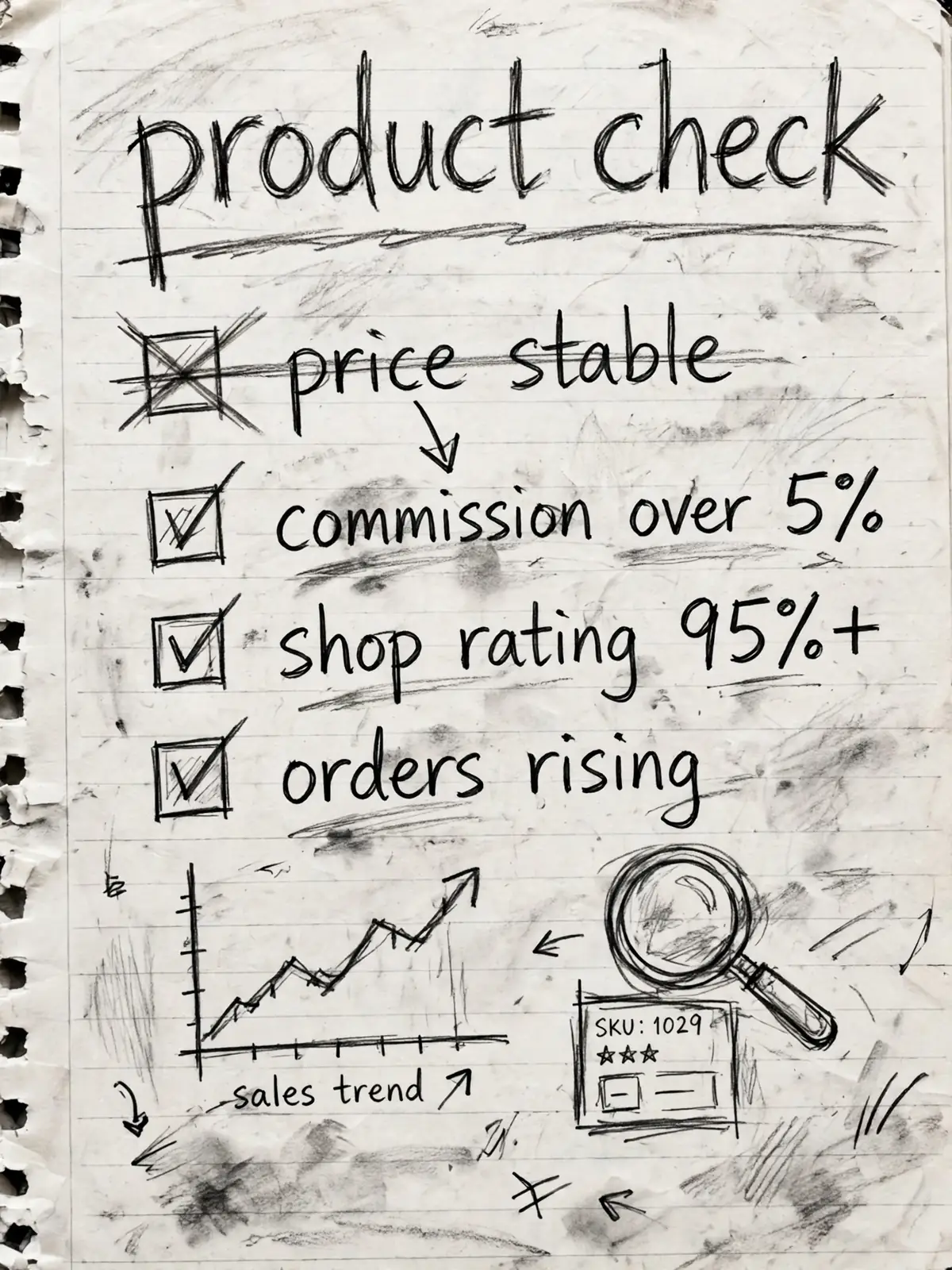
Commission rate is his hard filter: he skips anything under 5 percent, because 1 or 2 percent on a $100 product pays too little for the hours a video takes, while plenty of sellers offer 5, 10 or 20 percent. Analytics tools add two numbers the marketplace buries: order growth, showing whether a product is rising or fading, and a viral index from 0 to 100 built from views, likes, shares and product clicks.
His worked example was a $19.99 cooling fan at 10 percent commission, about $2 per sale, with roughly $1.6 million in total sales and 864 affiliates promoting it. Two dollars sounds small until the use case: he aimed the video at parents at theme parks, and families buy one fan per person. The fee structure is a change from marketplaces like Amazon, where Amazon keeps roughly $13 of a $30 sale through stacked seller fees.
Many listings offer a refundable sample: you pay for the product, hit a set number of sales, and the seller refunds the sample cost. The printer needed one sale, the fan needed three, some need none. And if a shop sits below the 95 percent rating the pilot requires, find the same product from another seller, since popular products are listed by several shops under slightly different packaging.
Making your first video: copy the format, change the angle
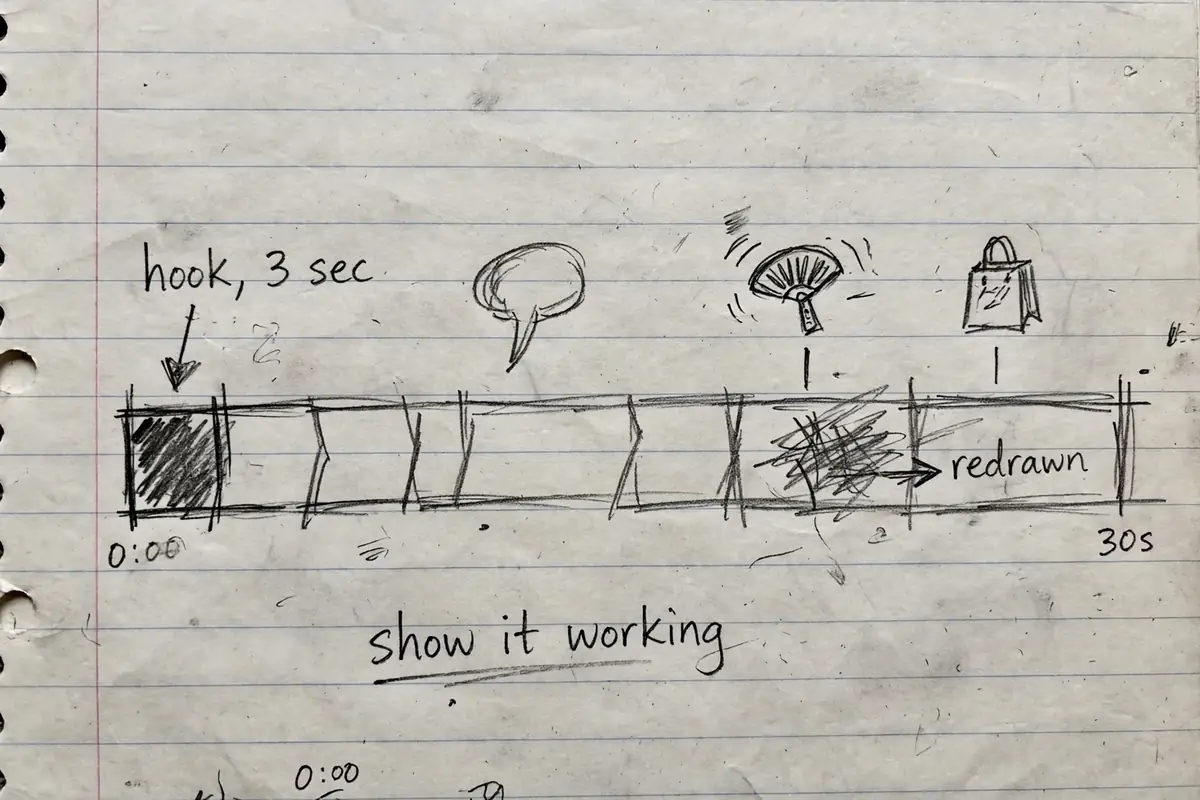
Find a video that is already selling your product and study its structure. The fan video he copied ran about 27 seconds: a complaint about cheap water-spray fans, a demo of the cooling plate fogging with condensation, then a stock warning. He kept that skeleton and changed the setting, filming as a parent stuck outside while his kids played in the pool.
For the script, he pasted the reference link into Claude, described his angle and adjusted the draft himself. He read it from a teleprompter app, edited in CapCut and cut every pause. The opening rule: the first three seconds decide the video, so open with energy, a pain point or a negative spin, such as telling viewers not to buy the cheap version. Visual hooks count too, though he notes one popular fan video faked its blast of cold air with dry ice.
Show the product working instead of describing its features. He filmed the condensation forming on the cooling plate rather than saying the fan blows cold air.
When you post, write the description, mix a few large hashtags with smaller niche ones, then tap Add link, choose Product and attach the item from your showcase. He keeps the product title short and adds mild urgency, along the lines of “almost out, ice cold fan”. Tick the sponsored disclosure, agree and post. A bulk route exists for later, AI avatar tools such as CreateUGC that generate review videos, but his own method is filming.
How and when you actually get paid
Commission follows one formula: revenue minus refunds, multiplied by your commission rate. A sale shows an estimated commission almost straight away, but that figure is not final. It is confirmed once the return window closes, and payment typically lands about 15 days after the delivery date.
Delays have specific causes: a seller settlement of delivery plus 31 days pushes your payout out with it, and an open dispute, refund or return holds that commission until it resolves. Rate changes are gentler. A rise applies immediately; a cut leaves your original rate in place for 30 days, with a notification two days before the protection ends. Estimated and confirmed commissions sit under Earnings in the creator centre.
Mistakes that waste your time
Dead trends are the expensive one. Fidget spinners were enormous around 2020 to 2022 and are finished now; filming them spends time, and sometimes sample money, on an audience that left. Seasonal products fail on a calendar instead: swimwear with Christmas approaching, or sweaters just before summer, has no buyers waiting.
The second mistake is describing features from a chair. A seated claim that a fan blows cold air convinces nobody when a competitor shows the cold plate fogging up on camera.
The third is treating one video as the whole attempt. Creators who sell post the same product repeatedly in slightly different versions, each covering a feature or angle the earlier ones missed.
Scaling once something works
When a format gets clicks and converts, make more videos in that format, find more products in the same niche with the same checks, and repeat. Once a niche runs on a repeatable formula, he suggests a second account in a different niche you know, rather than stretching the first account across topics. Formats do not transfer cleanly, so expect to adjust the style too.
One boost he found by accident: the fan was an Exposure Plus product, and TikTok credited the video with 3,000 extra views for featuring it. Check product pages for the badge.
None of this compounds like an asset does, and commissions stop when the posting stops. If you are thinking past the first payouts, the longer game is covered in how to make your first million. The short version here: join at 1,000 followers, pick products with real sales and a commission above 5 percent, film the demo, post the next version tomorrow.
Disclaimer: This article is educational content based on one creator’s walkthrough. It is not financial advice, and no income result is promised. Figures are the presenter’s own reports and can change as TikTok updates the program.