Most explanations of affiliate marketing stop at one sentence. An affiliate promotes a product through a tracked link, a customer buys through that link, and the affiliate earns a commission. All true, but only the surface. Behind a product launch sits a second system: a hierarchy of affiliates, and a trade in ready-made bonuses vendors build so their strongest promoters push harder.
Understanding how affiliate bonuses work means looking from the vendor’s chair, not the promoter’s. Most people meet affiliate marketing while hunting for an income stream on the way to their first million, and only ever see the promoter’s half of it.
The players in an affiliate program
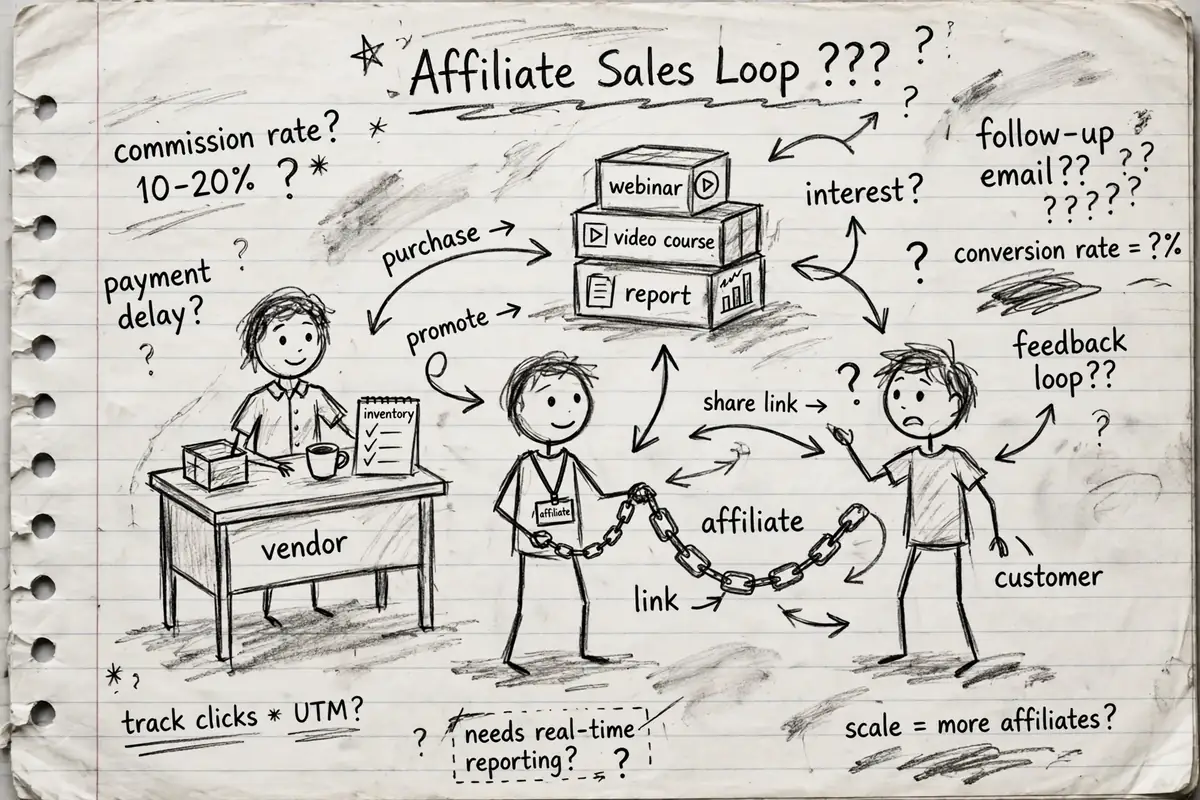
The cast is small. The vendor creates the product and runs the affiliate program. Affiliates promote it to their own lists and audiences, and earn a commission on each sale through their link. The customer buys, and the link they use decides which affiliate gets paid.
Programs take two broad shapes. Some vendors run their own program around a launch and recruit promoters directly. Others sell through marketplaces such as JVZoo and ClickBank, which host the product and publish contest leaderboards. The vendor in the source training works with both, but puts most effort into recruiting.
Paying for distribution is normal in online selling. A marketplace seller hands over fees on every order, a large part of how Amazon makes money. A digital vendor pays commissions instead, and then, following this playbook, pays again in bonuses.
What is a super affiliate? The three levels
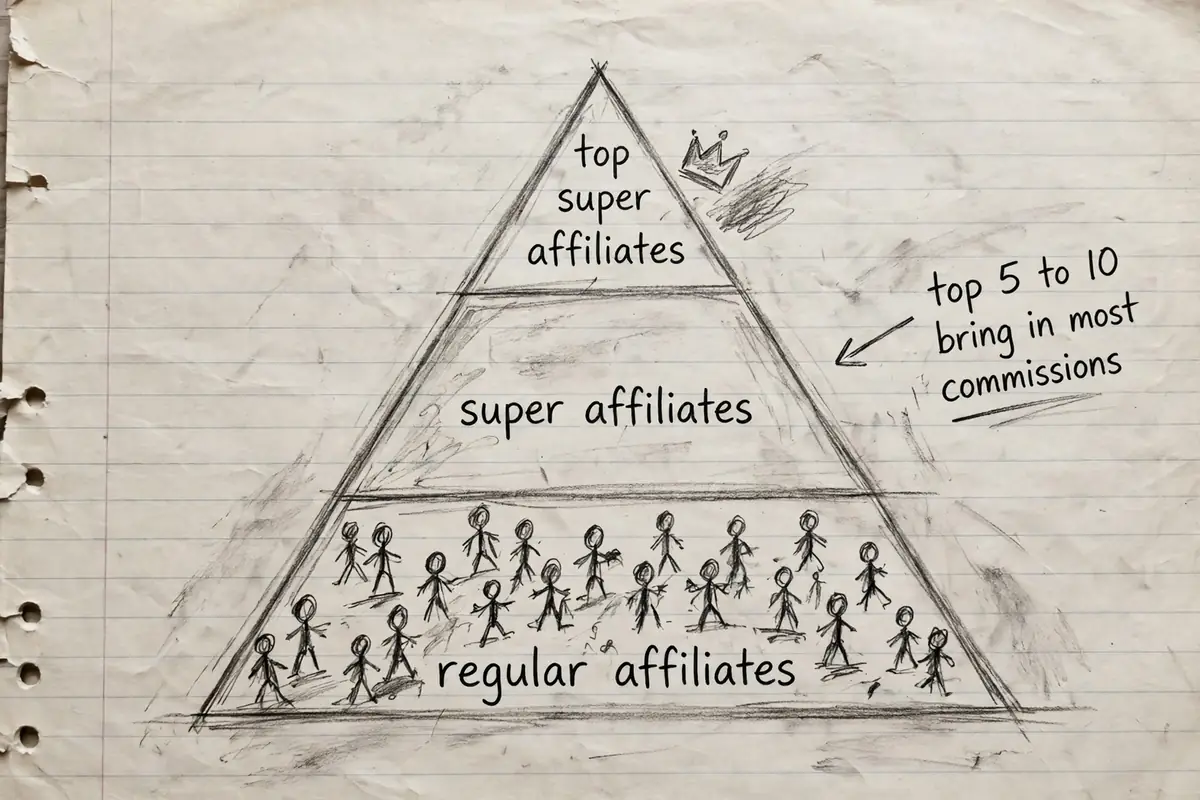
Vendors sort their affiliates into three levels, and the levels decide where a vendor spends his time.
Level one is the top super affiliates: promoters with big lists or serious traffic skills, the names finishing in the top ten or twenty of launch contests. Level two is the super affiliates below them, generating steady commissions. Level three is everyone else. Some will make a few sales. Many will never make one.
The presenter’s central claim is that the top five to ten super affiliates generally bring in the most commissions of an entire launch. That is why vendors obsess over level one, and why it is hard to reach: a top super affiliate gets 50 to a few hundred pitch emails a day. A generic one disappears into the pile.
Level three still matters. Ordinary affiliates bring long-term traffic, branding and search reach, and one who makes a first sale with your product tends to promote your next one. Help everyone, but build your best material for the top.
How do affiliate bonuses work?
A bonus is an extra product given free to a customer who buys through one particular affiliate’s link. Affiliates have used bonuses for years to raise their own conversions. Two affiliates promote the same product at the same price, and the one offering a valuable extra gives buyers a reason to choose his link over the other nine.
The vendor-side move flips that arrangement. Instead of leaving each affiliate to create his own bonus, the vendor creates bonuses for his affiliates to give away. The affiliate gets a stronger offer for his list without any production work. The vendor gets a promoter far more likely to mail. The presenter says this approach has been used in launches doing five and six figures, and stays underused because it costs the vendor time before the launch rather than during it.
His mindset point comes before any tactics: do not focus on the money first. Build a good product and help affiliates get results, and commissions follow.
Where bonus ideas come from
The brainstorming method runs on material the vendor already owns. List the product’s top five selling points, then pick the five strongest methods or benefits inside it. Then reshape: expand one small piece of the content into a different format. A report becomes a video, a webinar becomes an interview, a method becomes a software calculator (the presenter prices a simple one at about $25 to $50 through freelancer.com). Coaching calls and pieces of a future one-time offer work too. The rule is to elaborate on one piece without giving the product away. The bonus acts as a pre-sell and ends by pointing readers toward the full product.
The three bonus formats vendors build
Bonus reports
Reports are the fastest format and the lowest in perceived value, so the presenter aims them at level three affiliates, or bundles them upward. His recipe: take one strategy from the brainstorm, break it into at least five questions, and answer each in bullets or steps.
The shortcut is audio. Get someone in your niche to ask you those questions on a recorded call. Five to ten minutes of talking produces roughly seven to ten pages once transcribed. The training names oDesk and Fiverr for transcribers, and CutePDF Writer, a free tool that turns documents into PDFs.
Bonus videos
Video carries more perceived value than a report.
The first is a three-video arrangement built around a squeeze page. The affiliate sends visitors to a signup page carrying a video that teaches about half of a strategy, properly. Visitors join the affiliate’s list to watch it. The video ends by explaining that the rest comes with the product, bought through the affiliate’s link below. The affiliate builds his list, the vendor gets exposure, and finishing the method requires a purchase.
The second is a launch-only video course, recorded for five to ten hand-picked super affiliates. Exclusivity is the point. A super affiliate told a course exists for a handful of chosen promoters, with resale rights earnable through sales, has a reason to say yes that a plain pitch never gives him. Recording one is simple: break a method into steps, write each out, then film one video per step, one to five minutes each.
The tools named in the training are dated but specific: Jing for short free recordings, Camtasia Studio (about $300) at the paid end, Screencast-O-Matic ($15 a year, no recording limit) as the cheap middle, and a Blue Yeti USB microphone.
Bonus webinars
Webinars sit at the top of the value ladder, aimed at level one. A live webinar lets the super affiliate interview the vendor in front of his own audience, positioning the vendor as an expert the affiliate personally vouches for, and that tends to convert well. It also costs time, and live webinar software costs money. An automated webinar, recorded once and played back on schedule, is less personal but runs without the vendor in the room. The presenter’s habit: automated for most promotions, live when a super affiliate’s list converts strongly. GoToWebinar is his live tool, Evergreen Business System his automated one.
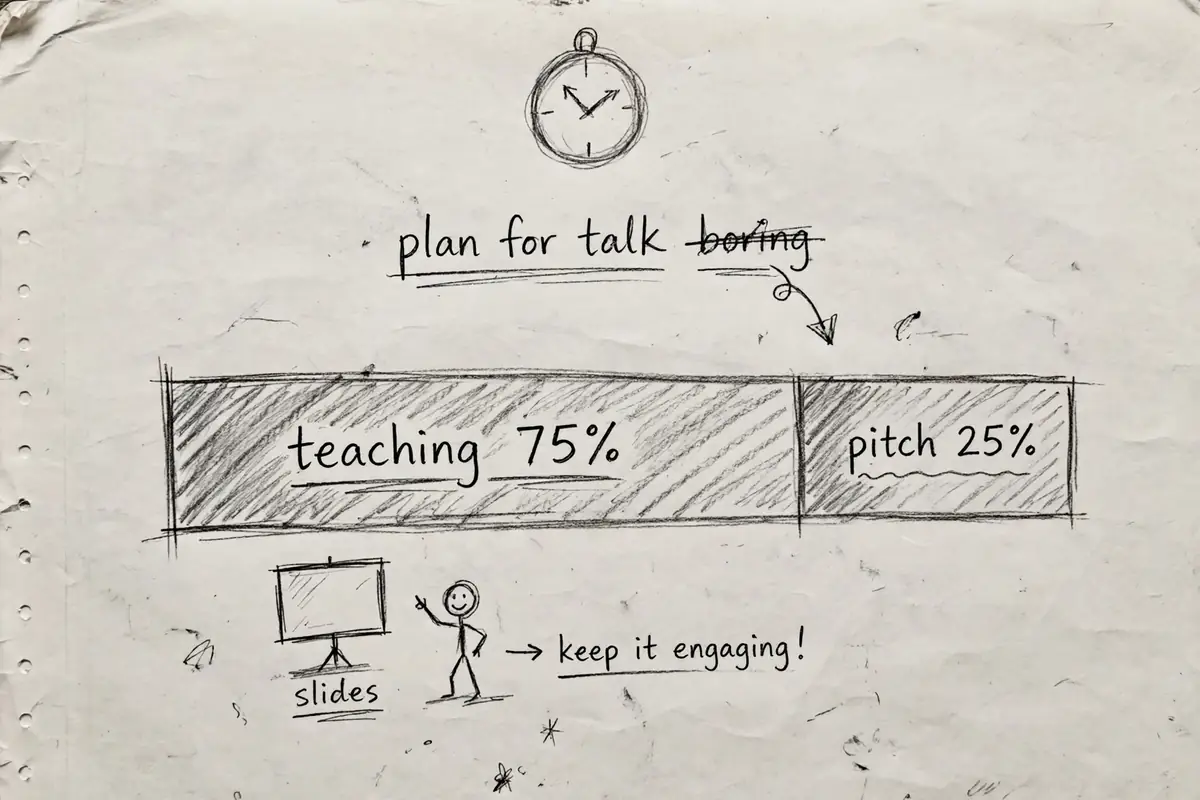
The formula he teaches is a ratio. About 75 percent of the session is teaching: three or four strategies, ten to fifteen minutes each. The remaining 25 percent is the pitch, with the last fifteen minutes covering the product and its benefits. No hard selling. The pitch frames the product as the detailed version of what the webinar summarised.
Two plays for landing top affiliates
Give away a product you already sell
The first play is to hand a super affiliate a bonus with a price tag already on it. The vendor takes another of his own paid products, one genuinely on sale elsewhere, and lets the super affiliate offer it free to anyone who buys through his link. Buyers can verify it is real: it has a live sales page. The pricing rule is strict: the bonus should cost the same as the main product or a bit more, never more than double. His example is a $97 product paired with a bonus priced between $97 and $200. Go above that and the main product starts to look cheap.
A vendor with no second product can manufacture one from interviews. Interview your super affiliates, transcribe the calls, package the set as a product, and let the interviewees offer it. They get exposure, their customers get content, and master resell rights can be added after the launch as a thank you.
Find them where contests are running
The second play is research. Super affiliates reveal themselves in affiliate contests, where leaderboards show exactly who can sell in a niche. The training points to JVNotifyPro for launch contests, JVZoo top seller lists and ClickBank contests, plus Google searches pairing a niche with the words affiliate contest. Similar products matter more than identical ones: a promoter doing well with a product like yours has a list that buys in your niche.
Before contacting anyone, do the homework. Join the affiliate’s list. Buy his product if he has one. Watch how he emails and what he promotes. Then skip the long email everyone else sends and record a short video instead: use his name, mention the product you bought and the launch where you saw his name, and explain the custom bonuses you are building for a few affiliates. Without this approach, the presenter says he collected over 20 rejections before his first yes, and that single yes started a snowball as other super affiliates joined.
What the bonus economy runs on
Strip the tactics back and the vendor’s job is plain. Commissions get an affiliate’s attention. Bonuses, built at the right level for the right tier, give that affiliate a better offer for his list, free of production work. Vendors who do this work before a launch get the top five to ten names to promote it.
Disclaimer: this post is educational content about how affiliate programs and bonuses work. It is not financial advice, and nothing in it promises a result.