This affiliate marketing tutorial for beginners follows one specific system, taught in a training video by a marketer who promotes Legendary Marketer, a digital marketing education platform. The setup: a front end you build once, a back end that follows up for you, and content that feeds both.
The presenter says he earns about $5,000 a month from this system after eight years at it, and he is upfront that it took time. Read his numbers as one person’s claims, not a typical result. The same steps work for other high-ticket programs too, he says, so the structure is what matters.
Affiliate marketing tutorial for beginners: the system in one page
You promote a cheap entry offer for a program that sells expensive products behind it. Your site has two pages, an email sequence follows up with non-buyers, and your content sends people to page one. The company handles the product, the checkout, and the high-ticket selling.
Step 1: Pick a program with a ladder of offers
Most beginners start by promoting a single product, and the math fights them either way. A cheap product pays a tiny commission. A $5,000 product pays well, but strangers rarely buy at that price from someone they just met.
The program solves that with a value ladder. You only promote the bottom rung, a low-priced entry offer he calls a tripwire, priced under $10. Here the entry offer is a 15-day business builder challenge. Anyone you refer is attributed to you for life, according to the presenter, and the company’s sales team sells the pricier offers further up the ladder, with the commission still going to you.
He says a single sale can pay up to about $2,800 once a referral climbs the ladder, while early commissions are often small, more like $2 or $18. He recommends buying into the program yourself, so you learn the product you are selling. He calls this learning while you earn, and it means this model is not free to start.
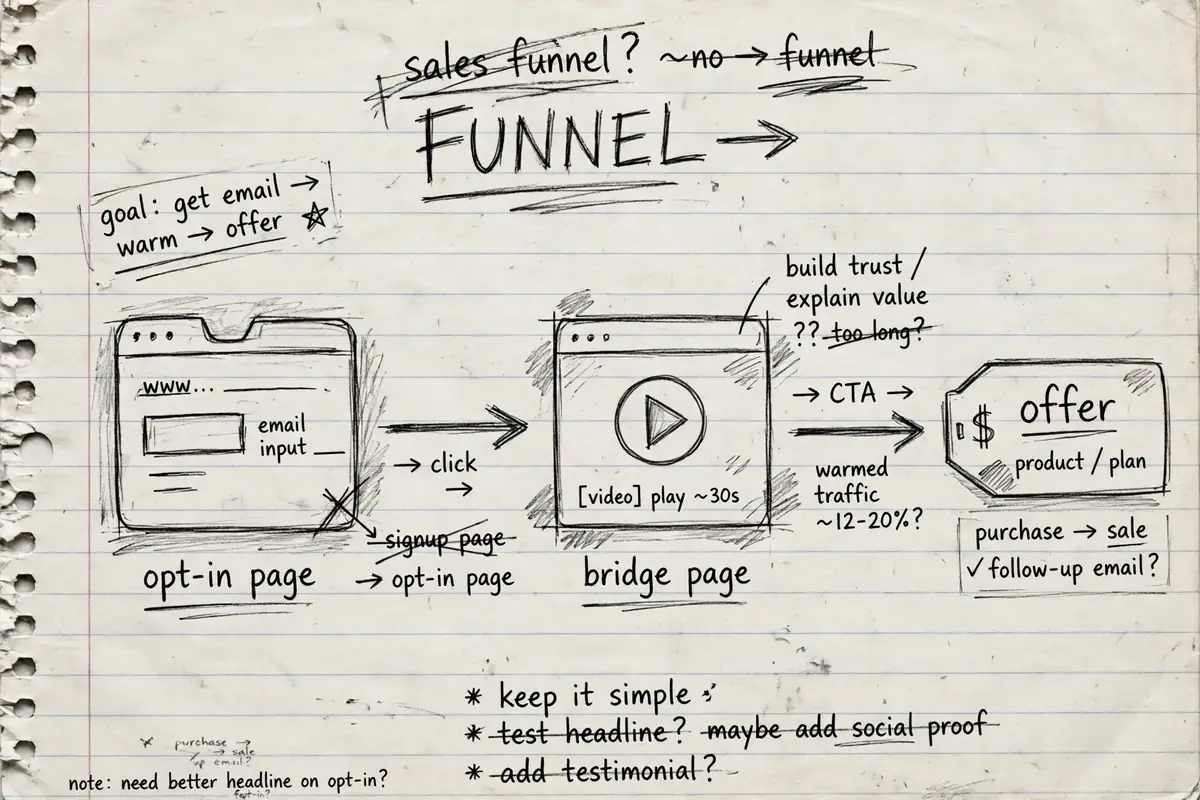
Step 2: Build a two-page website
The front end is just two pages. He builds his in ClickFunnels, a drag-and-drop page builder, and says WordPress can do the same job. For email he recommends GetResponse: affordable, and, in his words, friendly to affiliate marketing where some tools are hostile. He names Mailchimp as one to avoid.
Page one collects the email
The first page has one job: trade something interesting for an email address. He builds it around curiosity, testimonials, and an introduction to the opportunity. A freebie can help, but it is not required.
This page is also where he raises a compliance point: describe the opportunity in terms of what the program’s framework has done, not personal results you have not had. If you have not built a six-figure business, do not imply that you have.
Page two is the bridge page
After opting in, visitors land on a second page that introduces them to the program before any sales page. Sending cold traffic straight to the company’s page feels like an ad, he argues.
His bridge page carries testimonials, a short section about him, a note on what to expect from the challenge, and a video of about three and a half minutes. The button leads to the program’s sales presentation with his affiliate ID in the link, so any purchase is credited to him.
What the bridge video needs to cover
His bridge videos follow a rough script. Name the pain first: the frustration of earning nothing online. Speak with certainty. Stress what the visitor does not have to do: no product to create, no payment processing, no sales copy to write. Talk about outcomes rather than course details, and make it plain the offer is for beginners, including people who have failed before.
He also knocks competing models, naming Amazon FBA as crowded and dropshipping for its long shipping times. For the numbers behind the FBA comparison, see how Amazon makes money before repeating the claim. The video ends with one instruction: click the button and watch the short presentation.
One caution about testing: he split-tests both pages, but warns that testing only polishes. It will not rescue an offer nobody wants.
Step 3: Set up the email follow-up
Most visitors will not buy on the first visit. The back end exists for them.
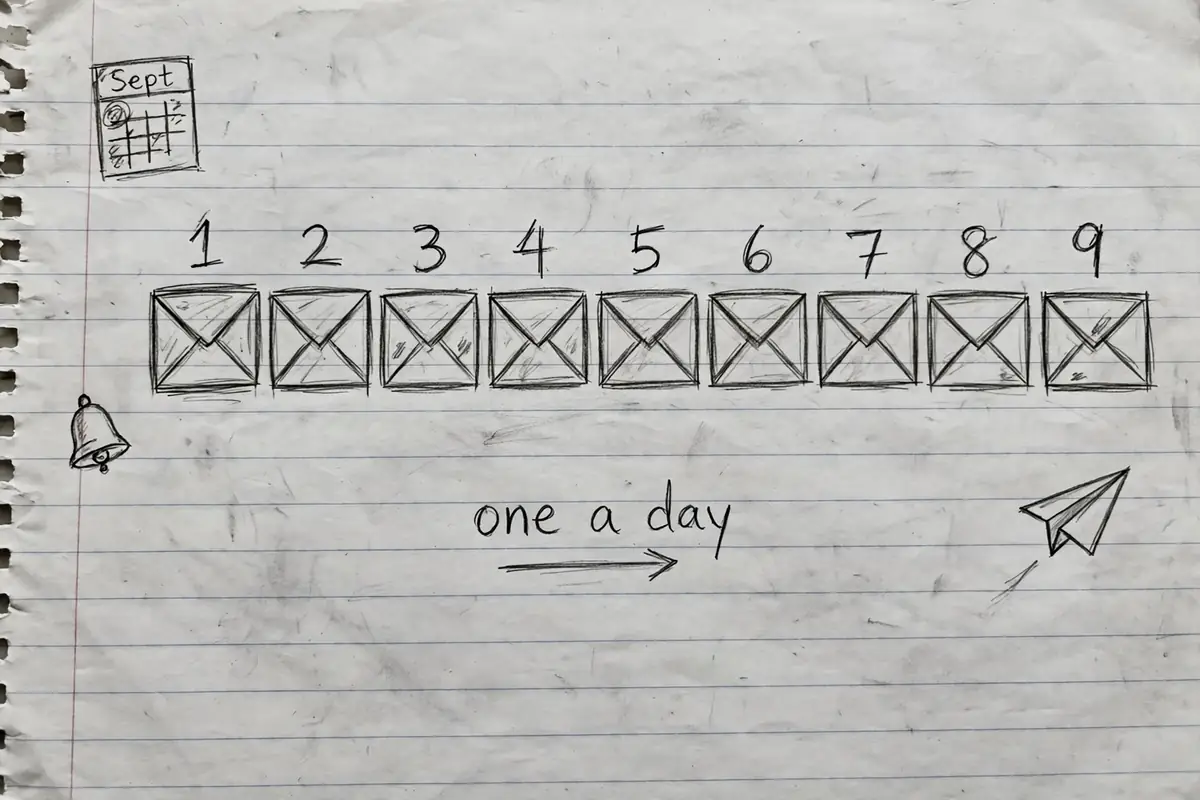
His autoresponder sends one email a day for eight or nine days, starting immediately with a welcome email. That first email keeps his affiliate link within easy reach, so subscribers who decide later can find it in their inbox.
The sequence has a second job he considers more important: making subscribers believe they can do this. His method is to show beginners earning their first dollar, not people claiming millions.
When the sequence ends, the follow-up does not. He says to email your list at least once a week, mixing teaching, trust building, and offers, because a list you never make offers to earns nothing. Good stories get reused, retold from different angles over a month. He sends as often as once a day himself.
Step 4: Get traffic with content first, ads second
His order: attract people with content first, then retarget site visitors with Facebook ads. A visitor who already knows him converts far more easily than a stranger, which is why ads come second.
He works with two platforms. YouTube is the one he rates highest, because it runs on search and videos keep bringing people in long after they are posted. Facebook groups build momentum faster, but they demand daily showing up to lead them. Pick the one that fits how you work; he is better at videos than at rallying a group, so YouTube is his main channel.
His current chain: short TikTok videos point viewers to his YouTube channel, not straight to his opt-in page, because TikTok traffic converts badly on its own. His video descriptions point to his opt-in page. After the sequence, he invites subscribers into his free Facebook group, and active groups get recommended to more people.
He started a brand new channel for this, despite already having one with 75,000 subscribers, so it stays on one topic: the program, then affiliate marketing, then making money online. Same message, repeated. That is what turns a channel into an authority.
Choose topics that attract buyers
He warns against chasing views with topics like how to make money without money, or how to make money as a broke 16 year old. Those videos attract big audiences who cannot or will not buy anything.
The topics he aims for are narrower: how to start a business as a beginner, how to get started with high ticket affiliate marketing. Fewer views, better viewers. Ignore vanity metrics like subscriber counts, he says, because one sale up the ladder can be worth more than a crowd of freebie seekers. Each view is one potential sale, so record for the people who might buy.
Step 5: Document your journey instead of faking expertise
The advice he repeats most is to document the process from day one. Start the channel, the group, or the blog before you have results, and post updates daily or a few times a week on what you are doing.
There is a practical reason. When your first commission lands, it might be $2. That tiny notification is proof, to the beginners watching you, that a beginner can earn something with this. You become your own social proof, and the backlog of honest beginner content convinces the next person to follow your recommendation.
He pairs this with learning by teaching: explain each tactic in a video or group post as you learn it, because teaching is how the material sticks. And he keeps coming back to one point: the program is not the business. The business is the audience and the trust you build; affiliate programs are how an audience gets monetized.
On mindset, he puts the split at roughly 80 percent mindset, 20 percent strategy. His version of mindset is not motivational talk. It is remembering who you are serving, so the work stops being about how you look on camera and becomes about the people you are helping.
How long does it take to earn your first affiliate commission?
There is no fixed answer, and the presenter does not offer one. He says reaching about $5,000 a month took time even for someone who already knew marketing, and he calls the system not a get rich quick scheme. His examples of first commissions are $2 and $18. The starting amounts are so small that the first dollar is the real milestone, because it proves the whole chain works: content, opt-in, bridge page, sale, commission.
From there, what you earn depends on traffic, the offer, and how steadily you publish. His view is that most people stop too early, before the videos and the email list had time to build on each other. If you are mapping the road from a first commission toward bigger targets, our guide to how to make your first million covers how teachers like him frame that climb. Treat every figure here as a claim to test against your own results, not a forecast.
Two pages, one email sequence, one content channel, repeated long enough to matter. The beginners who get stuck build the pages and then skip the unglamorous part: showing up with new content and new emails, week after week.
This article is educational content, not financial advice. Income figures are one presenter’s claims, affiliate earnings vary widely, and no result is promised or typical.