4pc Hub Centric Rings 73.1mm to 57.1mm Review (2026): Center Aftermarket Wheels & Stop the Shake
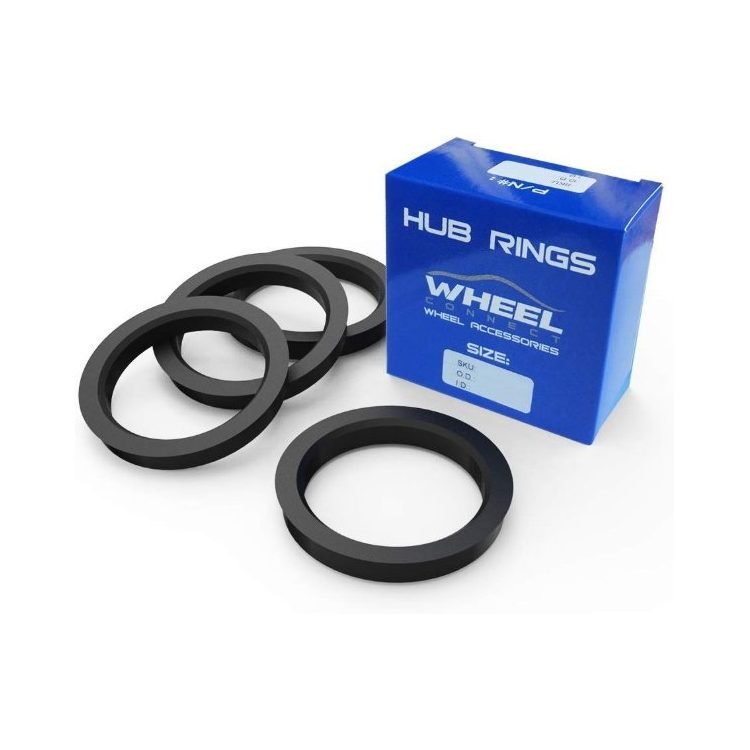
A steering wheel that shudders at highway speed after fitting aftermarket wheels usually means one thing: the wheel is not centered on the hub. Aftermarket wheels often have a larger center bore than the car’s hub, so the wheel sits slightly off-center and vibrates. This 4pc hub centric rings 73.1mm to 57.1mm set in ABS plastic fills that gap — a 73.1mm outer ring that fits the wheel bore and a 57.1mm inner ring that fits the hub — so the wheel centers properly and the shake goes away.
In this article
- 4pc Hub Centric Rings 73.1mm OD to 57.1mm ID ABS Plastic Wheel Spacers
- 4pc Hub Centric Rings 73.1mm to 57.1mm Key Specifications
- What Hub Centric Rings Actually Do
- Getting the Size Right — Measure First
- ABS Plastic vs Aluminum — Which to Pick
- Who Is It For?
- You May Also Like
- Frequently Asked Questions
- Final Verdict: Should You Buy It?
4pc Hub Centric Rings 73.1mm OD to 57.1mm ID ABS Plastic Wheel Spacers
- 73.1mm outer diameter fits the wheel center bore
- 57.1mm inner diameter fits the vehicle hub
- Corrosion-resistant ABS plastic, lightweight and easy to fit
- 4 rings included — one for every wheel
PROS
- ✓ Centers the wheel on the hub, so vibration from an off-center fit disappears
- ✓ Corrosion-resistant ABS plastic — no rust, no seizing to the hub
- ✓ Lightweight and simple to fit — no tools, no modification
- ✓ 4-pack covers all four wheels in one purchase
- ✓ Far cheaper than re-machining wheels or living with the shake
CONS
- ✕ Only fits 57.1mm hubs and 73.1mm wheel bores — measure both before ordering
- ✕ Plastic rings are not the pick for track or extreme-heat use — aluminum suits that better
- ✕ Will not fix vibration caused by unbalanced tires or a bent wheel
4pc Hub Centric Rings 73.1mm to 57.1mm Key Specifications
| Quantity | 4 rings (one set for all four wheels) |
| Outer Diameter (O.D.) | 73.1mm — must match the wheel center bore |
| Inner Diameter (I.D.) | 57.1mm — must match the vehicle hub diameter |
| Material | ABS plastic, corrosion resistant |
| Fit Tolerance | Within ±0.2mm |
| Part Number | HR7310-5710 |
| Package Dimensions | 3.15 x 3.15 x 1.57 inches |
| Use For | Centering aftermarket wheels on the hub, reducing steering vibration |
What Hub Centric Rings Actually Do
A hub centric ring is a simple spacer ring that fills the gap between the car’s hub and the center bore of the wheel. Factory wheels are made to fit their car’s hub exactly, so they center themselves. Aftermarket wheels are made with a large center bore so one wheel can fit many cars — and that leaves a gap around the hub. With that gap, the wheel is held centered only by the lug nuts, and even a tiny offset shows up as a vibration in the steering wheel at speed. These hub centric rings 73.1mm to 57.1mm close the gap: the 73.1mm outer edge sits snug in the wheel bore while the 57.1mm inner edge sits snug on the hub lip, so the wheel is centered on the hub itself, the way it should be.
Note the title calls them “wheel spacers”, but they do not push the wheel outward or widen the track — they only center the wheel on the hub. If you want the wheels to sit further out, that is a different part entirely. These rings change nothing about wheel offset or stance; they only fix centering.
Getting the Size Right — Measure First
Hub rings only work when both numbers match exactly. The outer diameter must match the wheel’s center bore — 73.1mm here — and the inner diameter must match the vehicle’s hub lip — 57.1mm here. The fit tolerance is only ±0.2mm, so guessing is not an option: measure the hub with calipers and check the wheel’s center bore specification before ordering. This 57.1mm hub and 73.1mm bore combination is common on many Audi, Volkswagen, BMW, Chrysler, Dodge and Pontiac models, but always confirm your own car and wheels — the same model can wear different hubs across years and trims. If either number is off, the ring will not seat, and the vibration will stay.
ABS Plastic vs Aluminum — Which to Pick
These rings are ABS plastic, and for everyday road driving that is the practical choice: plastic cannot rust, it will not seize onto the hub, it is light, and it costs less than aluminum. The listing’s own comparison shows the same sizes offered in both materials for a reason — aluminum rings suit heavy-duty and track use, where heat is higher, while plastic rings suit daily drivers that never see those temperatures. For a normal commuter or weekend car with aftermarket wheels, ABS rings do the job and come off easily at the next tire change. Whichever material you pick, the size is what matters — a wrong-size aluminum ring fits no better than a wrong-size plastic one.
Who Is It For?
This 4pc hub centric rings 73.1mm to 57.1mm set is for anyone who fitted aftermarket wheels and now feels a shake in the steering wheel at highway speed. If your car has a 57.1mm hub and your wheels have a 73.1mm center bore, these rings are the cheap, correct fix — a few minutes per wheel, no tools, no garage visit. If your wheels are factory originals, you do not need rings at all: factory wheels already match the hub. And if the vibration is there with factory wheels, look at tire balance and wheel condition first, because rings will not fix that.
You May Also Like
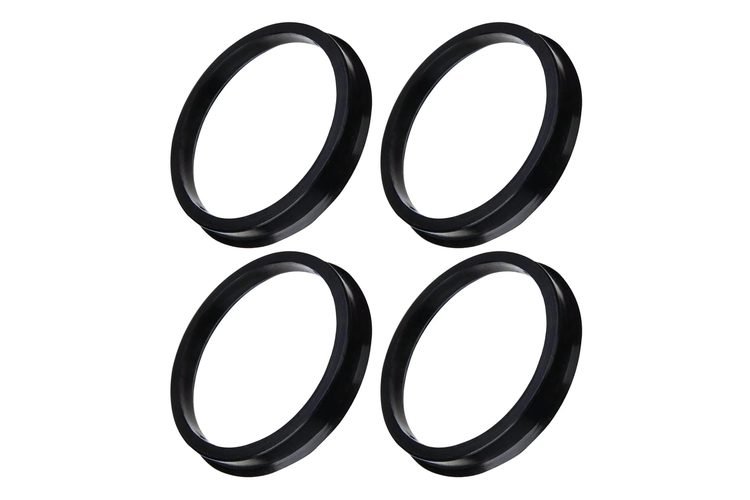
Hub Centric Rings – Black Polycarbonate, 57.1mm to 73.1mm (4-Pack)
Same 57.1mm hub to 73.1mm bore fit in corrosion-resistant black polycarbonate plastic — a tough alternative for daily driving.
Check Product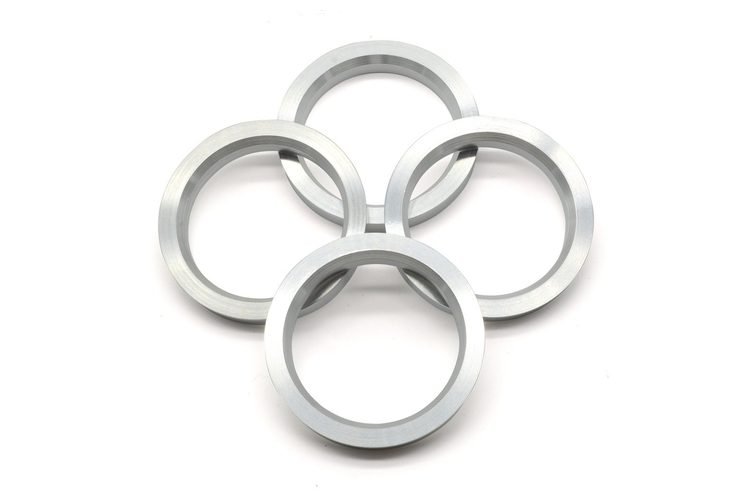
Hub Centric Rings – Silver Aluminum, 73.1mm to 57.1mm (4-Pack)
The same 73.1mm to 57.1mm fit in machined silver aluminum — the stronger pick for heavy-duty use and higher heat.
Check Product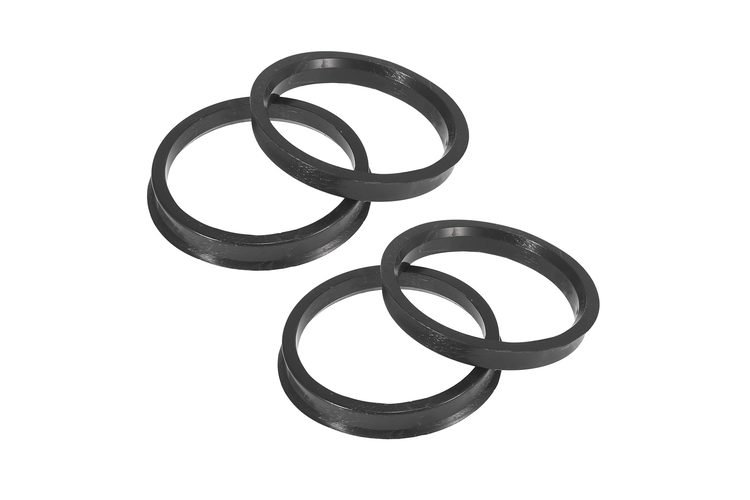
Hub Centric Rings – ABS Plastic, 73.1mm to 64.1mm (4-Pack)
Same ABS plastic build and 73.1mm wheel bore, sized for a 64.1mm hub instead — the right fit for a different set of vehicles.
Check ProductFrequently Asked Questions
It fills the gap between the vehicle hub and the center bore of an aftermarket wheel, so the wheel sits centered on the hub instead of hanging on the lug nuts. A centered wheel stops the steering-wheel vibration that an off-center wheel causes at highway speed.
Two numbers must match exactly: the outer diameter must equal your wheel’s center bore (73.1mm here) and the inner diameter must equal your vehicle’s hub diameter (57.1mm here). The tolerance is only ±0.2mm, so measure your hub with calipers and check your wheel’s bore specification before buying.
No — despite the name in the title, hub centric rings do not push the wheel outward or widen the track. They only center the wheel on the hub. True wheel spacers are a different part that moves the wheel further out from the hub.
No. Factory wheels are made to match their car’s hub exactly, so they are already hub-centric. Rings are only needed when aftermarket wheels have a larger center bore than the car’s hub.
For everyday road driving, ABS plastic rings are the practical pick: they cannot rust or seize to the hub, they are light, and they cost less. Aluminum rings are the stronger choice for heavy-duty or track use, where heat is higher. Either way, the size must match exactly.
Final Verdict: Should You Buy It?
If your aftermarket wheels shake at speed and your car has a 57.1mm hub with 73.1mm-bore wheels, this 4pc hub centric rings 73.1mm to 57.1mm set is the right fix at the right price — ABS plastic that will not rust or seize, four rings for all four wheels, and a fit that takes minutes. Just measure first: the rings only work when both diameters match, and no ring fixes vibration from unbalanced tires or a bent wheel.
Check Product